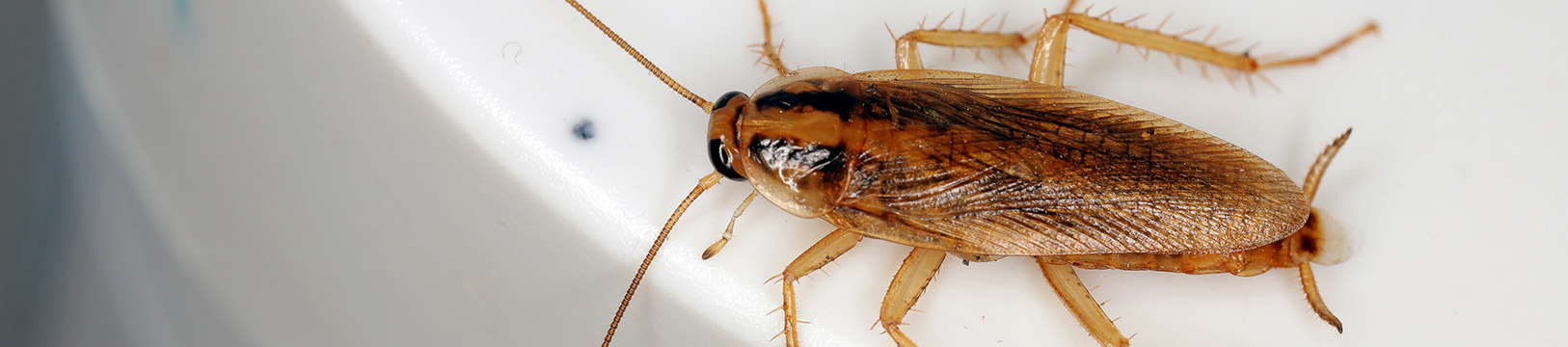
German cockroaches are one of the most common indoor roaches in South Carolina and Georgia. They prefer warm, humid environments and are most often found in kitchens and bathrooms. These roaches reproduce quickly, so a small problem can soon become a full-blown infestation.

German cockroaches are active year-round in SC and GA, but they’re most noticeable when:
These roaches thrive in indoor environments, so they don’t need to “move indoors” — they’re already inside.
Quick ID
German cockroaches can be mistaken for other roaches, but these differences help identify them:
German cockroaches prefer warm, humid, and secluded areas.
Common hiding spots include:
Common signs of a German roach problem include:
German cockroaches are more than a nuisance — they can impact your health and property.
Common risks include:
German cockroaches often enter homes through small gaps and hitchhike on items brought inside.
Common entry points include:
German cockroaches reproduce extremely quickly, and a single female can produce hundreds of roaches in a year. They don’t need to leave your home to expand their numbers; once they’re inside, the infestation can grow fast because they hide in tight spaces where you can’t see them.
A few common ways infestations spread inside a home include:
Because German cockroaches hide in so many inaccessible places, infestations often continue even after homeowners think they’ve “cleaned them up.”
German cockroaches prefer homes with easy access to food, water, and warmth.
Common attractants include:
If you spot German cockroaches, the best move is to call a pest control company right away. These pests are most active at night, so if you’re seeing them during the day, it could indicate a larger problem.
Why DIY doesn’t work:
German cockroaches reproduce rapidly and nest in hard-to-reach areas, such as wall voids, cabinets, and behind appliances. DIY sprays and traps may kill a few visible roaches, but they rarely reach the hidden nest, which means the infestation continues to grow.
While professional treatment is the most effective solution, these steps can help you make your property less appealing to cockroaches and other pests:
If you see roaches, droppings, or other signs of infestation, don’t wait; German cockroaches reproduce fast and can spread quickly. Compass Pest Management offers professional inspections and comprehensive pest control services for homes and businesses throughout South Carolina and Georgia.

Dale G has offered his expertise on a number of matters for our home: pest control, moisture control, moisture remediation, and insulation. I always leave the conversation feeling much more knowledgeable and having options. Dale makes us excited to contract Compass.
Anthony R.
Greenville, SC

Professional and friendly service! We are new to the area and happy we selected Compass for our pest control needs.
April Z.
Anderson, SC

I’ve been using Compass for over 5 years now for pest control and mosquito control and they do a great job. They are on time and always very professional. They are very accommodating if I ever needed anything else done like an ant problem in my kitchen.
Penny F.
Cornelia, GA



Helpful Tips & Info