Silverfish are humidity-driven insects that live quietly inside homes across Upstate South Carolina and Northeast Georgia, often for a long time before anyone notices them. They do not bite or sting, but they can damage paper, cardboard, and certain stored fabrics, and they may feed on dry pantry goods. Homeowners often notice damage or other evidence of activity before seeing a silverfish.
Silverfish may be seen indoors in any month. Sightings generally increase from March into May, are most common from May through September, and taper from October through winter. Occasional indoor sightings can still occur during the low-activity months.
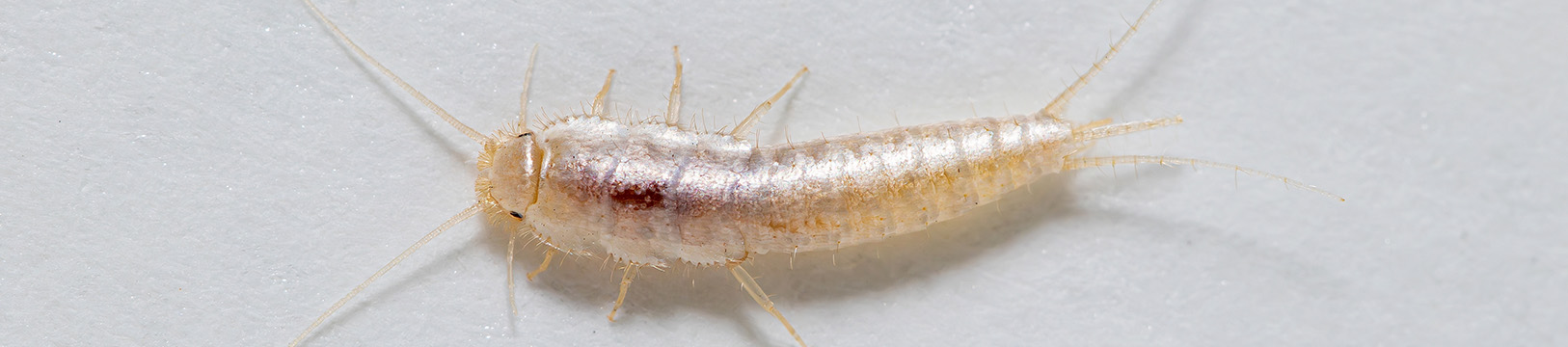
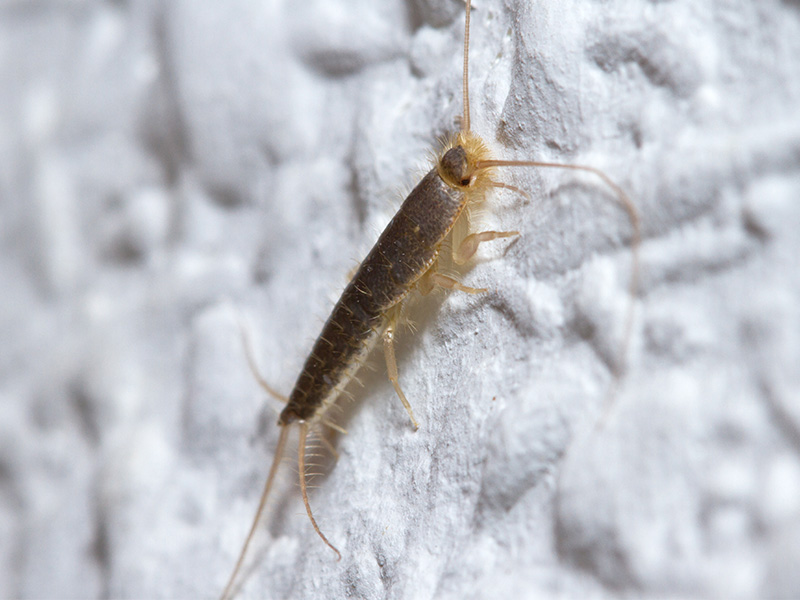
Silverfish have a distinctive tapered body, long antennae, and three thin filaments extending from the rear.
Quick ID
A close relative, the firebrat, looks similar but prefers hotter areas near ovens, fireplaces, furnaces, and hot-water pipes.
Silverfish hide during the day and emerge to forage at night. Indoors, they favor protected locations that remain humid or contain undisturbed materials.
Common signs of silverfish activity include:
Silverfish are not considered harmful to people. They do not bite or sting, are not venomous, and are not known to transmit disease.
Their primary concern is material damage and food contamination. Silverfish digest starches and cellulose, which puts books, documents, photographs, wallpaper, cardboard, and certain stored fabrics at risk. They may also feed on and contaminate stored dry food.
Damage develops gradually, so papers, keepsakes, and clothing left undisturbed for long periods may be affected before the insects are discovered.
Silverfish remain where they can find humidity, food, and protected hiding places. A home does not have to be dirty for a population to become established.
Silverfish may also be carried indoors in boxes, books, paper products, furniture, clothing, or stored food.
Silverfish develop slowly and can live for several years. Because they remain concealed in cracks, wall voids, insulation, and other protected areas, treating the few insects seen in a bathroom or hallway may leave much of the population outside the treated area.
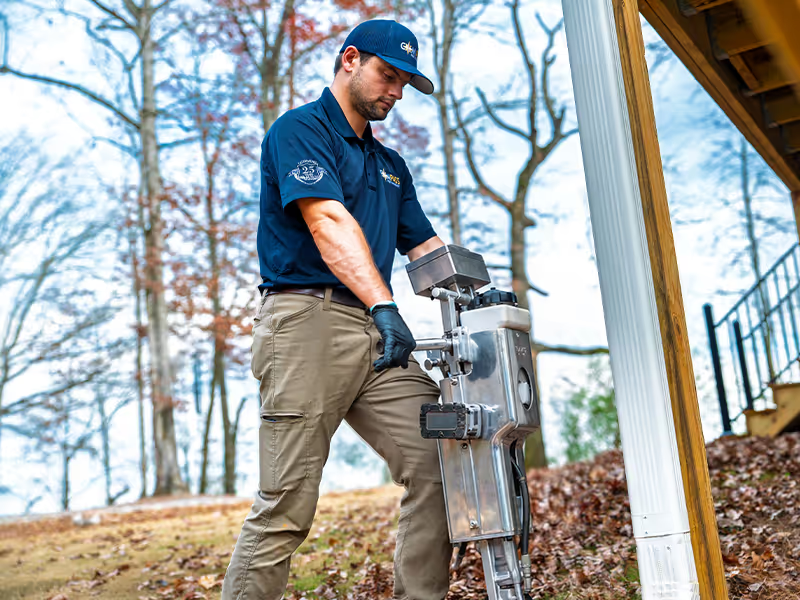
The other half of the problem is the environment. Surface treatments do not change a damp crawl space that continues to support silverfish. When crawl-space moisture is contributing to activity, targeted pest treatment and moisture control work together more effectively than surface treatment alone.
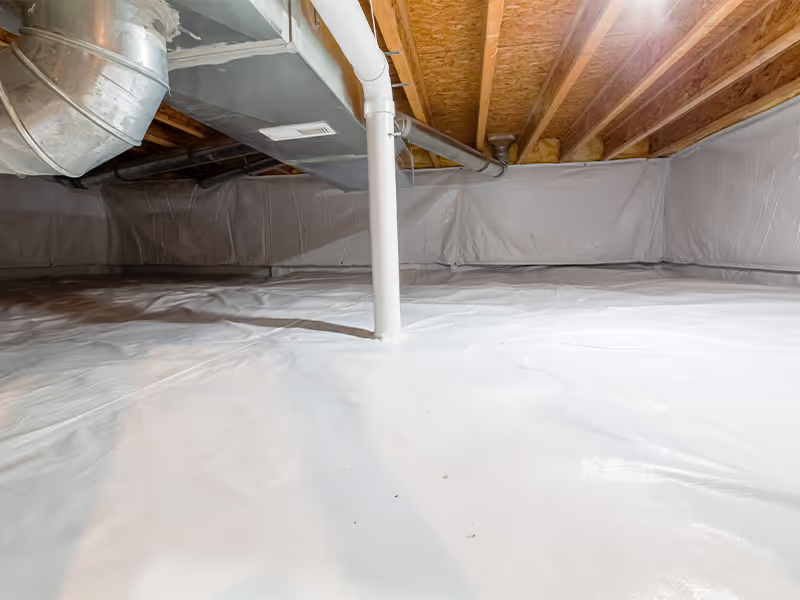
It’s also a good idea to lower the humidity in the crawl space. When crawl-space moisture contributes to activity, crawl-space encapsulation may help make the area less suitable for silverfish and other moisture pests.
Silverfish do not come up through drains. They may wander into a sink or tub from nearby wall voids or gaps around plumbing lines, then become trapped because they cannot climb the smooth porcelain sides.
Not necessarily. Silverfish can feed on mold and fungi, and both may occur in humid areas. A silverfish sighting can point to excess moisture, but it does not confirm the presence of mold.
Yes. Female silverfish place their eggs in protected cracks, crevices, dust, and other concealed materials. The eggs are extremely small and are rarely noticed by homeowners.
If you find silverfish, damaged paper, or thinned patches on stored fabric in your home, reach out to Compass Pest Management. We are a local, family-owned pest control company serving Upstate South Carolina and Northeast Georgia, and we have been serving homes in this region since 1995.
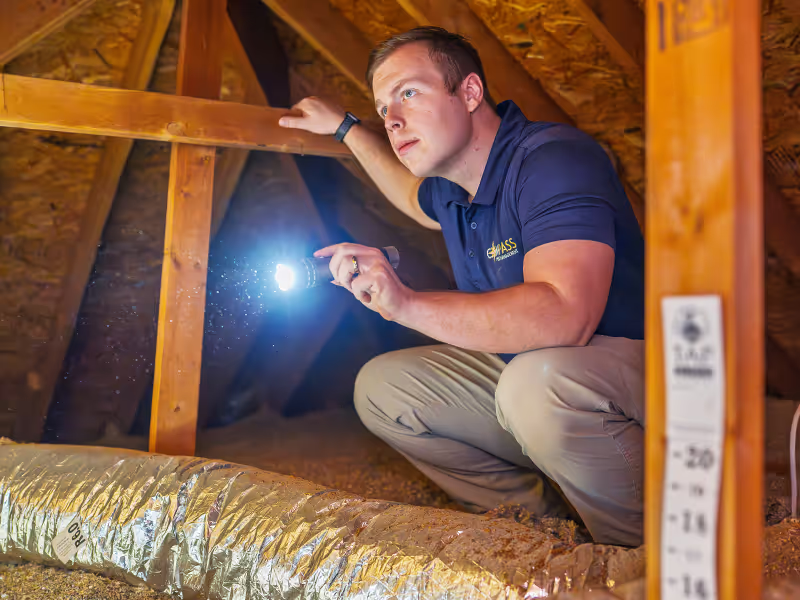
Our technicians inspect for and treat active silverfish harborage. If the crawl space is damp and contributing to activity, Compass can also provide moisture-control solutions for that space.
Silverfish are covered under our home pest control plans, which provide year-round service backed by our 100% satisfaction guarantee. Request your free quote today or reach out to schedule an inspection.

Dale G has offered his expertise on a number of matters for our home: pest control, moisture control, moisture remediation, and insulation. I always leave the conversation feeling much more knowledgeable and having options. Dale makes us excited to contract Compass.
Anthony R.
Greenville, SC

Professional and friendly service! We are new to the area and happy we selected Compass for our pest control needs.
April Z.
Anderson, SC

I’ve been using Compass for over 5 years now for pest control and mosquito control and they do a great job. They are on time and always very professional. They are very accommodating if I ever needed anything else done like an ant problem in my kitchen.
Penny F.
Cornelia, GA



Helpful Tips & Info