Fleas are tiny, blood-feeding insects that commonly infest homes throughout South Carolina and Georgia — especially homes with pets. Once indoors, fleas spread quickly through carpets, furniture, bedding, and pet resting areas, where they continue reproducing and developing out of sight.
Because the Southeast stays warm and humid for much of the year, fleas remain active far longer than they do in colder parts of the country. Even during winter, fleas can continue to develop in temperature-controlled homes.
If you're noticing fleas jumping on your pet, itchy bites around the ankles, or increased scratching from your dog or cat, there's a good chance fleas are already established in your home. Compass Pest Management offers professional interior flea treatments designed to target fleas where they live and reproduce.
Fleas thrive in warm, humid conditions, making South Carolina and Georgia ideal environments for them much of the year. You're most likely to notice flea activity when:
Even though fleas are most active outdoors during spring and summer, they can remain active year-round inside temperature-controlled homes. Once fleas are established indoors, the season doesn't matter as much — they'll keep reproducing as long as they have a host and the right conditions.
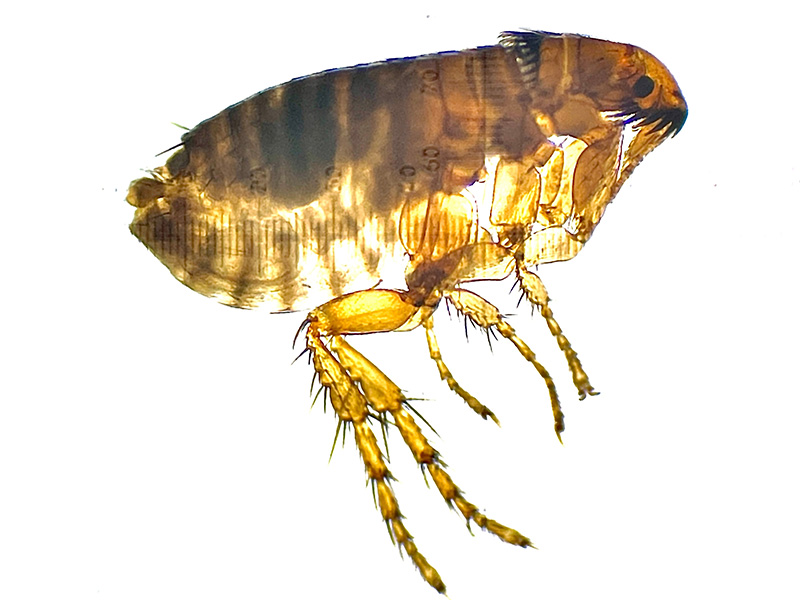
Fleas are very small and can be hard to spot, but there are a few key features that set them apart from other household pests.
Quick ID
Fleas move quickly through fur, carpet fibers, and fabric, which is part of what makes them so hard to catch. You may notice them jumping near your pet or across a carpet, but they can disappear just as fast.
Flea bites and bed bug bites can look similar because both cause small, itchy red bumps. However, flea bites are usually more common around the ankles and lower legs, while bed bug bites are more often found on exposed skin after sleeping.
If you're unsure which pest you're dealing with, Compass Pest Management can help identify the problem during an inspection. You can also review our bed bug identification guide for a more detailed comparison.
Fleas don't build nests like ants or termites. Instead, they live on or near their hosts and lay eggs that drop into the surrounding environment.
Common areas where fleas hide and reproduce include:
One reason fleas are so difficult to eliminate is that most of the infestation isn't visible. Adult fleas make up only a small percentage of the total flea population, while eggs, larvae, and pupae remain hidden deep inside carpet fibers, rugs, upholstery, and pet bedding.
Flea pupae can also remain protected inside tiny cocoons for days or even weeks before emerging. Vibrations, movement, heat, and nearby activity can trigger adult fleas to emerge, which is why homeowners sometimes notice a sudden spike in activity after vacuuming or returning home from travel.
Because flea eggs, larvae, and pupae are nearly invisible to the naked eye, an infestation can grow significantly before you notice adult fleas.
Yes. Fleas can infest homes even when no pets live there.
Wildlife such as raccoons, squirrels, and opossums, as well as rodents and strays, can introduce fleas into the home, crawl space, porch, or attic. In multi-family housing, fleas may also spread from neighboring units.
Many homeowners are surprised to learn that flea problems can begin outdoors before eventually spreading inside.
Fleas are small, but they leave behind several signs that homeowners can watch for.
Common signs include:
If you're noticing any of these signs, there's a good chance fleas are already established in your home — not just on your pet.
Fleas are drawn to homes that provide easy access to hosts and favorable living conditions.
Common attractants include:
Homes with pets are the most common targets, but fleas can enter homes without pets too — especially if wildlife has been active near the foundation or crawl space.
Fleas aren't typically dangerous, but they can cause real discomfort for people and pets.
Common issues include:
Because fleas reproduce so quickly, even a small problem can become a significant nuisance within a few weeks if left untreated.
Fleas almost always enter homes by hitchhiking on a host.
Common ways fleas get indoors include:
Once a few fleas make it inside, they begin laying eggs almost immediately — and those eggs settle into carpets, furniture, rugs, and bedding where the next generation develops.
One of the biggest misconceptions homeowners have about fleas is that the problem only exists on their pets. In reality, most of the infestation is usually hidden in carpets, rugs, upholstery, and pet bedding.
Many store-bought sprays and foggers kill visible adult fleas but fail to reach developing fleas hidden deep inside fabric and carpet fibers. Without targeting the full flea lifecycle, infestations often continue returning.
Professional flea control targets both active fleas and the developing stages hidden throughout the home.
Prevention is the best defense against fleas, especially in South Carolina and Georgia, where warm weather keeps fleas active for much of the year.
Steps that help reduce the risk include:
Consistent flea prevention on your pets is the single most important step. When pets are protected, fleas have a much harder time gaining a foothold inside your home.
If fleas are already inside your home, prevention alone usually won't solve the problem. Eggs and larvae embedded in carpets, rugs, and furniture continue developing even after adult fleas are removed.
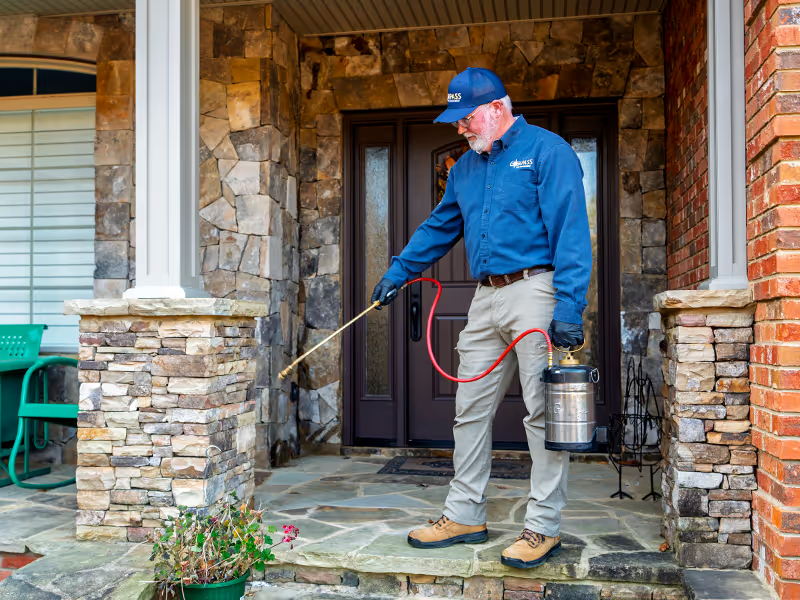
Compass Pest Management offers a one-time interior flea treatment that targets carpets, rugs, upholstery, pet bedding, and other fabric surfaces where fleas live and reproduce. Our treatment is designed to interrupt the flea lifecycle and eliminate active infestations.
A few things to know about our flea control service:
Professional treatment is the fastest and most reliable way to fully eliminate an indoor flea infestation.
Since 1995, Compass Pest Management has helped homeowners across Upstate South Carolina and Northeast Georgia solve indoor flea infestations and other pest problems.
Our licensed technicians understand the flea pressures common throughout the Southeast and stay involved with both the Georgia Pest Control Association and South Carolina Pest Control Association to stay current on treatment methods and industry best practices.
If fleas are taking over your home, contact Compass Pest Management to schedule your professional flea treatment.

Dale G has offered his expertise on a number of matters for our home: pest control, moisture control, moisture remediation, and insulation. I always leave the conversation feeling much more knowledgeable and having options. Dale makes us excited to contract Compass.
Anthony R.
Greenville, SC

Professional and friendly service! We are new to the area and happy we selected Compass for our pest control needs.
April Z.
Anderson, SC

I’ve been using Compass for over 5 years now for pest control and mosquito control and they do a great job. They are on time and always very professional. They are very accommodating if I ever needed anything else done like an ant problem in my kitchen.
Penny F.
Cornelia, GA



Helpful Tips & Info