American cockroaches (Periplaneta americana) are large cockroaches commonly found around homes and buildings in Upstate South Carolina and Northeast Georgia. They are among the largest cockroach species property owners may encounter in the region and, despite their name, are not native to North America. Today, they are well established throughout the Southeast.
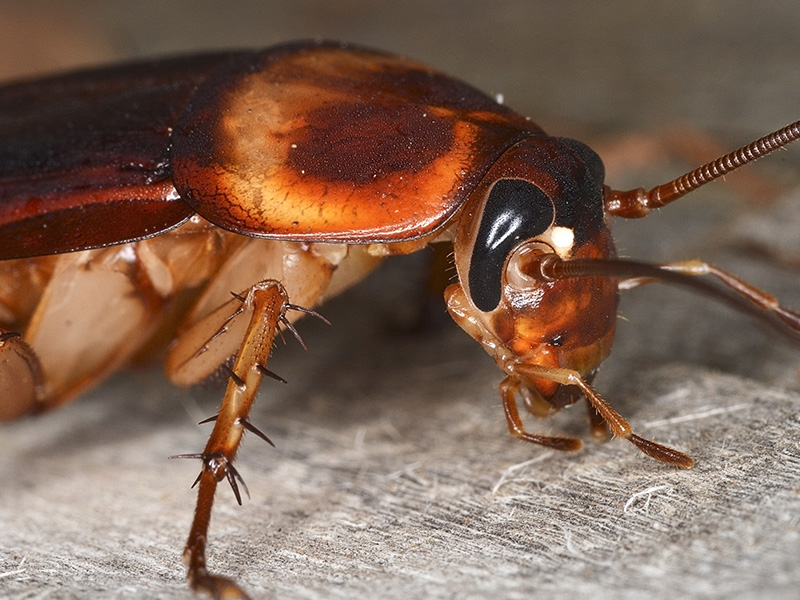
American cockroach activity around homes typically increases in early spring and peaks during the warmer months. Activity slows as temperatures cool, although these cockroaches can remain active year-round in warm, protected areas.
Quick ID:
American cockroaches are large enough that homeowners often notice their size first, but their coloring provides a better identification clue.
Adults are reddish-brown to chestnut brown with a pale yellow or tan margin around the pronotum, the shield-like area directly behind the head. They also have very long antennae and fully developed wings.
Nymphs are smaller and wingless but become increasingly reddish-brown as they mature.
Both adult males and females have wings. American cockroaches can fly, particularly in warm conditions, and are also extremely fast runners, often racing for cover when disturbed.
Female American cockroaches produce dark brown egg cases called oothecae. Each case is roughly ⅓ inch long and typically contains about 16 eggs. Females deposit the cases in protected locations, sometimes attaching them to a surface near food or suitable shelter.
Finding egg cases or immature cockroaches indoors is more significant than seeing an occasional adult, as it can indicate that cockroaches are reproducing nearby.
American cockroaches are more commonly associated with damp, lower-level environments than many other large roaches found in Georgia and South Carolina.
Around a home or building, they may be found in or near:
They are nocturnal and usually spend daylight hours hidden in dark, protected locations.
Unlike smokybrown cockroaches, which are frequently associated with tree holes, rooflines, attics, and other above-ground outdoor harborages in the Southeast, American cockroaches are much more closely associated with sewers and damp areas at or below ground level.
That difference can help narrow down which large cockroach you have found.
American and smokybrown cockroaches can both be large, fast-moving, and reddish or dark brown, so homeowners frequently lump them together as “palmetto bugs.”
The coloring is one of the easiest differences to spot. American cockroaches are reddish-brown with a noticeable pale yellow or tan border around the area behind the head. Smokybrown cockroaches tend to be a more uniform dark mahogany or reddish-brown without the American cockroach’s contrasting pale border.
Where you find the roach can also provide a clue. American cockroaches are strongly associated with sewers, basements, crawl spaces, and other damp environments. Smokybrown cockroaches are especially common around mature trees, tree holes, landscaping, sheds, crawl spaces, and attics in Southern neighborhoods.
“Palmetto bug” and “water bug” are informal names that may be used for several large cockroach species, so those names alone don’t identify the species.
They can, but American cockroaches are less likely than species such as German cockroaches to establish large populations in kitchens and other living areas.
A single adult indoors may simply have wandered in. Repeated sightings deserve more attention, especially if you are also finding nymphs or egg cases. Those are stronger signs that American cockroaches may be living and reproducing indoors.
American cockroaches can enter homes and buildings through:
Because American cockroaches also live in sewers and drainage systems, they may occasionally enter through plumbing-related areas. That does not mean they routinely crawl up through properly functioning household drains. Entry is more likely where drain traps have dried out, or openings around plumbing are not well sealed.
Seeing the cockroach itself is usually the most obvious sign, but other evidence can help determine whether activity is occurring nearby.
Watch for:
Because American cockroaches are primarily active at night, homeowners may not see them often.
American cockroaches do not bite or sting people as part of their normal behavior, but their presence indoors can create sanitation concerns.
They frequently inhabit sewers, decaying organic material, garbage areas, and other unsanitary environments before moving across floors, storage areas, food-preparation spaces, or other surfaces.
Cockroach debris is another concern. Proteins found in cockroach droppings, saliva, and body parts can cause allergic reactions or trigger asthma symptoms in some people.
For that reason, ongoing cockroach activity inside a home or business should be addressed rather than treated as simply an unpleasant nuisance.
Moisture is especially important to American cockroaches.
Conditions that can make areas around a property more favorable include:
American cockroaches are scavengers and can feed on many types of organic material, but access to water and humid shelter often plays a major role in where they establish themselves.
Finding one does not necessarily mean a home is dirty. The roach may be coming from a crawl space, garage, sewer-connected area, or outdoor location rather than living in the kitchen itself.
Prevention starts with making it harder for cockroaches to enter and reducing the damp conditions they favor.
Helpful steps include:
These steps can make a property less favorable to cockroaches, but repeated indoor sightings may indicate activity in areas that are difficult to inspect or reach.
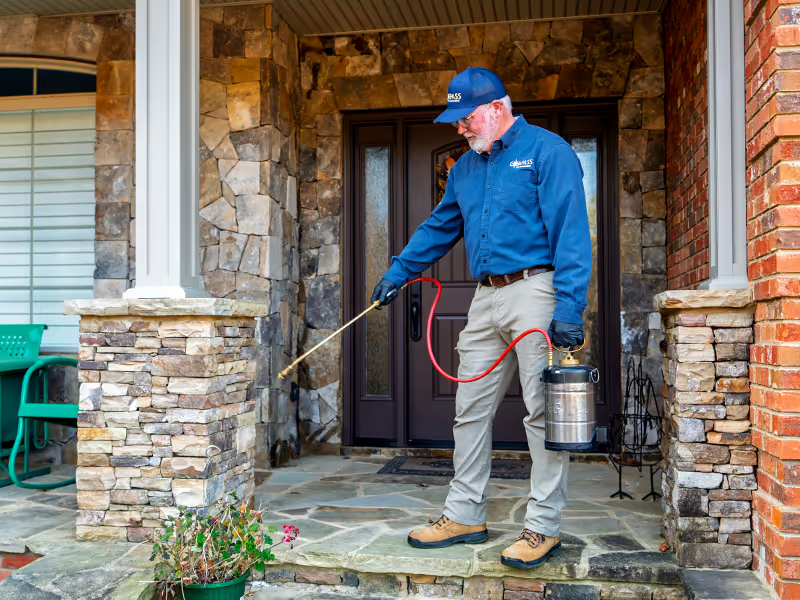
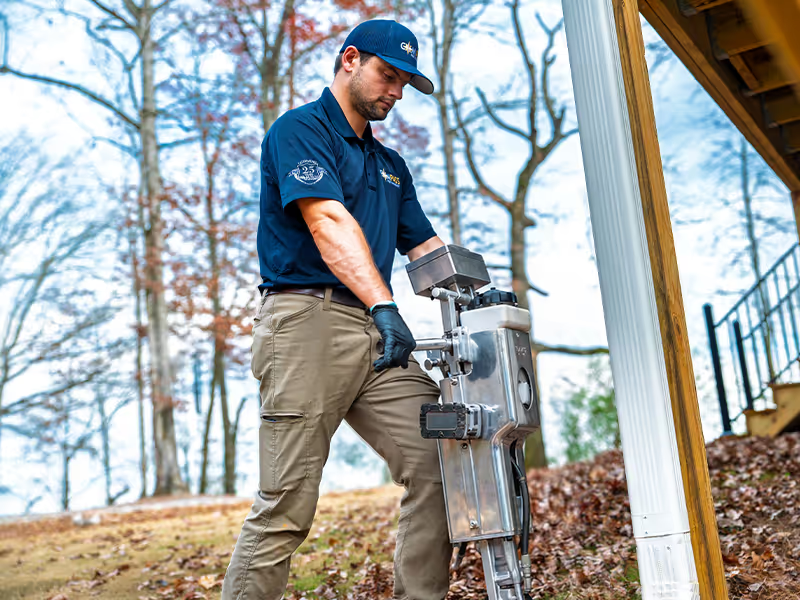
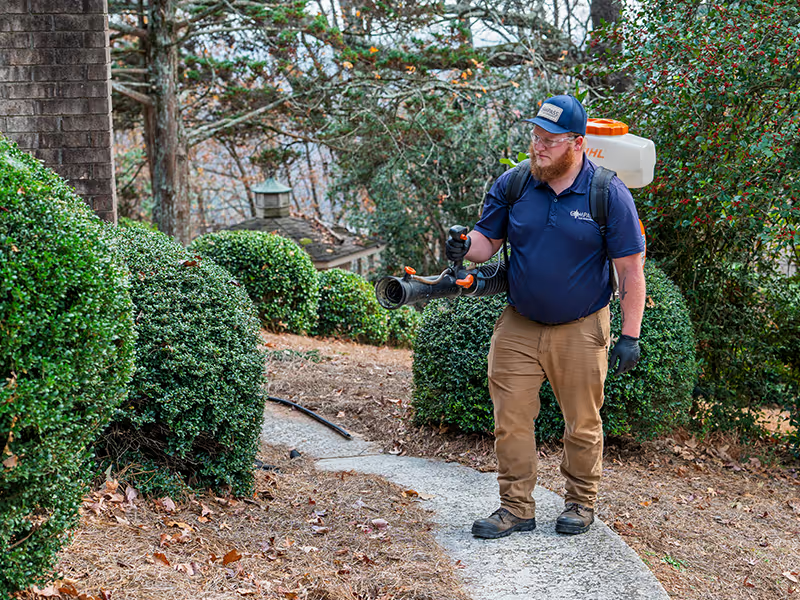
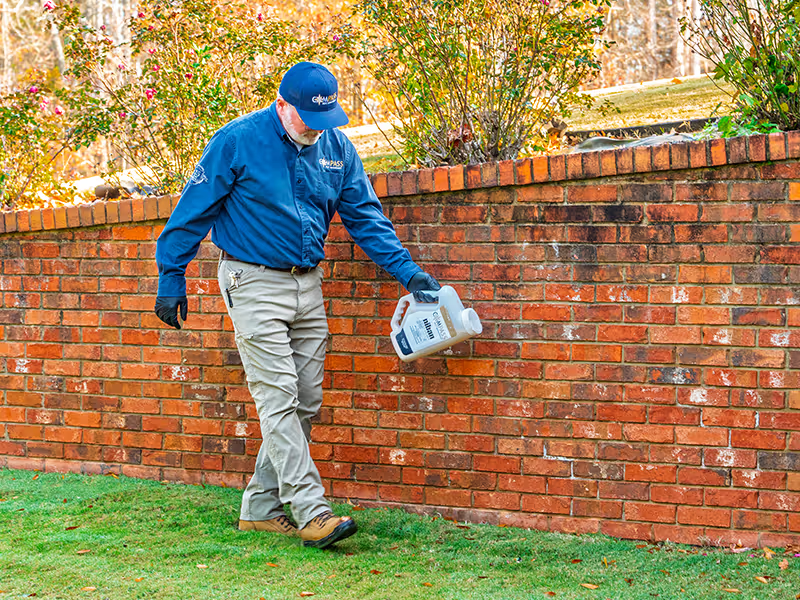
If American cockroaches are showing up in your home, contact Compass Pest Management. Our local pest control team will inspect and treat the active infestation.
For ongoing protection, American cockroaches are covered under Compass Pest Management’s residential pest control plans, along with other common household pests. That means we’ll address the problem you’re seeing now and help prevent new pest problems throughout the year.
Compass also helps businesses control American cockroaches and other common pests.
Heavy rain can disrupt outdoor and drainage areas where American cockroaches live, prompting them to move into drier, more protected spaces. That can lead to more sightings around garages and crawl spaces, and inside homes, after periods of heavy rain.
Yes. Finding an American cockroach on an upper floor does not mean it originated there. These roaches can move through wall voids, pipe chases, utility openings, and other parts of a structure. Adults are also capable of flying.
American cockroaches do not typically seek out people, even though they are active at night. In rare cases, a cockroach could wander onto a bed or crawl on a sleeping person, but this is not typical behavior.
Seeing an occasional cockroach shortly after treatment does not necessarily mean the treatment failed. Cockroaches that were already present may still emerge, and American cockroaches can continue moving in from surrounding areas. If live cockroach activity continues, contact your pest control provider so the situation can be reassessed.
Serving homes and businesses throughout Upstate South Carolina and Northeast Georgia, our local, family-owned pest control company is ready to help you take care of your cockroach problem and keep your property protected from other common pests.
Contact Compass Pest Management to request your free quote.

Dale G has offered his expertise on a number of matters for our home: pest control, moisture control, moisture remediation, and insulation. I always leave the conversation feeling much more knowledgeable and having options. Dale makes us excited to contract Compass.
Anthony R.
Greenville, SC

Professional and friendly service! We are new to the area and happy we selected Compass for our pest control needs.
April Z.
Anderson, SC

I’ve been using Compass for over 5 years now for pest control and mosquito control and they do a great job. They are on time and always very professional. They are very accommodating if I ever needed anything else done like an ant problem in my kitchen.
Penny F.
Cornelia, GA



Helpful Tips & Info