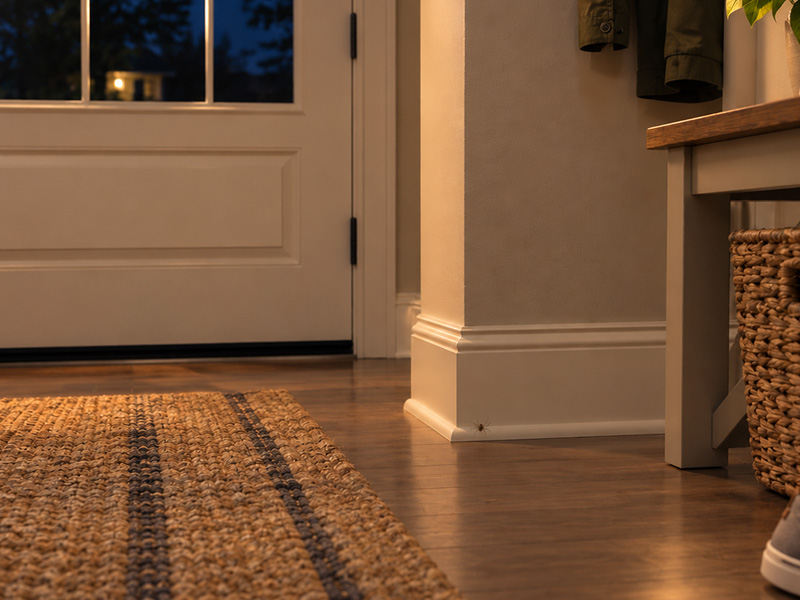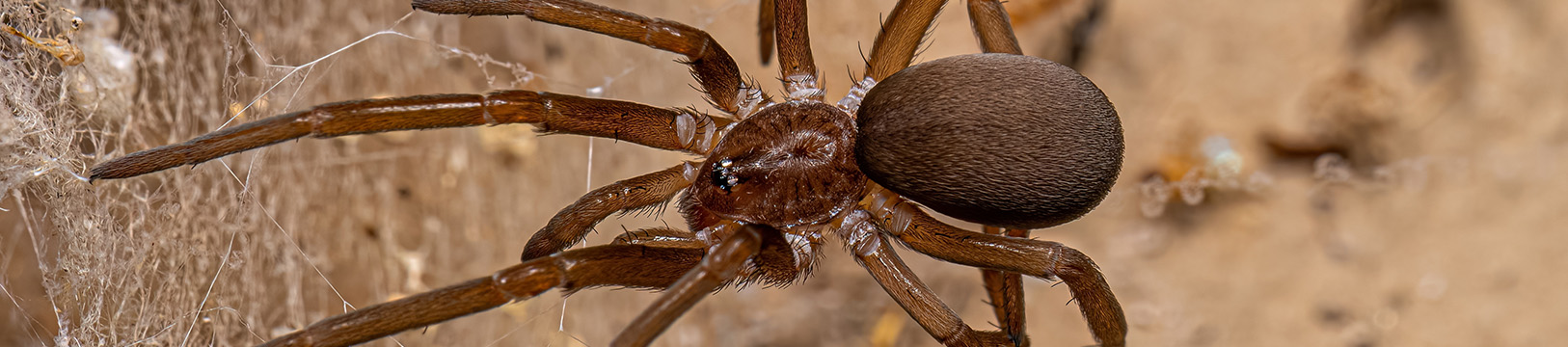
The Southern house spider (Kukulcania hibernalis) is one of the largest and most alarming-looking spiders homeowners encounter in Upstate South Carolina and Northeast Georgia. Although relatively harmless to people, its size and dark coloring make it a common source of "is this dangerous?" calls — and the male is frequently mistaken for a brown recluse.
Southern house spiders are part of the Filistatidae family, nicknamed "crevice weavers," because females typically remain associated with a web built around a sheltered crack or gap rather than wandering like adult males.

Southern house spider activity generally slows during colder weather and increases as temperatures warm, so sightings in Upstate South Carolina and Northeast Georgia are more likely during the warmer months. Males — not females — are the ones that wander and may end up indoors while searching for mates. Females typically remain associated with their webs and sheltered crevices.
This species shows strong differences between males and females, which is part of why it causes so much confusion.
Females:
Males:
Male Southern house spiders are frequently mistaken for brown recluses because of their coloring and general shape. A male Southern house spider typically has especially long, slender legs and a pair of unusually long palps in front that can almost look like an extra set of legs. Any marking on its back is much less distinct than the characteristic violin-shaped marking of a brown recluse, and its eight eyes are grouped together on a small raised area.
A brown recluse also has long, slender legs, but they are generally not as long in proportion to the spider as those of a male Southern house spider. Its palps are much shorter and less conspicuous. Brown recluses have six eyes arranged in three pairs and may have the characteristic violin-shaped marking on the cephalothorax.
The unusually long legs and prominent palps of a male Southern house spider are useful clues from a distance — no need to get close enough to count eyes.
True to their "crevice weaver" name, females build distinctive, messy-looking webs that spread outward from a sheltered crack or crevice, with a retreat extending back into the opening.
Common locations include:
They're found on houses, barns, sheds, and bridges throughout the South, and are far more common outdoors and in protected exterior spots than actually inside living spaces.
Southern house spiders are not considered medically dangerous. They aren't aggressive, and documented bites are rare — the few reported bites have involved localized pain and swelling rather than serious effects. The bigger issue is usually the alarm caused by their size and resemblance to brown recluse spiders, as well as webbing buildup on the exterior of the home.
A large spider or dense web around a doorway or window is often a sign that other insects are active nearby, since spiders build webs where prey is plentiful — so getting rid of the spiders usually means addressing what's drawing them in.
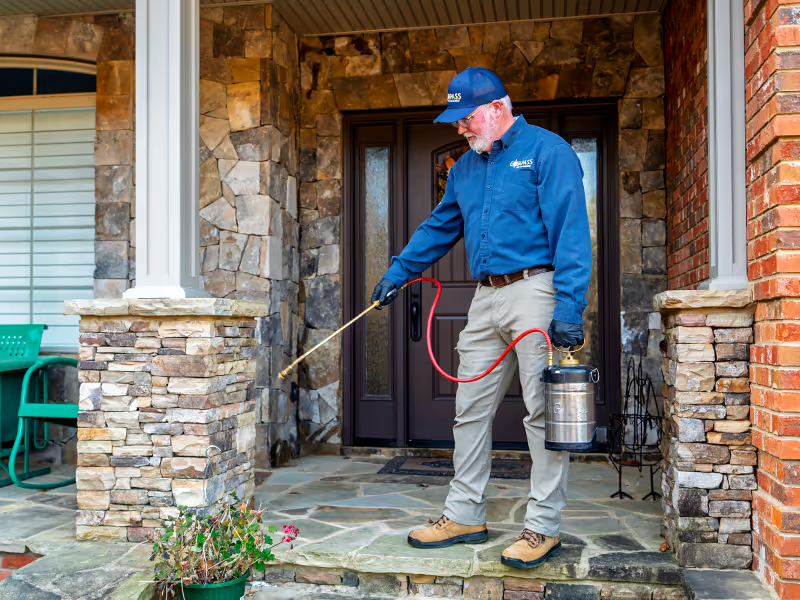
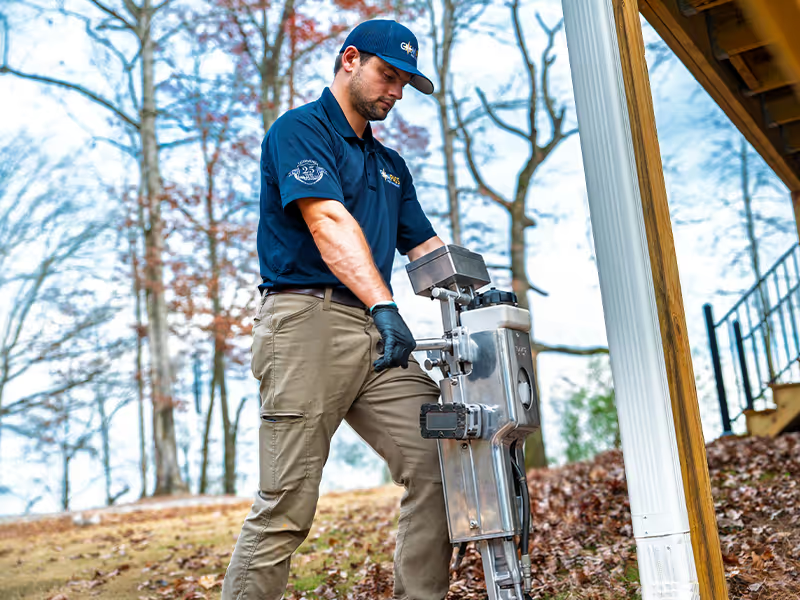
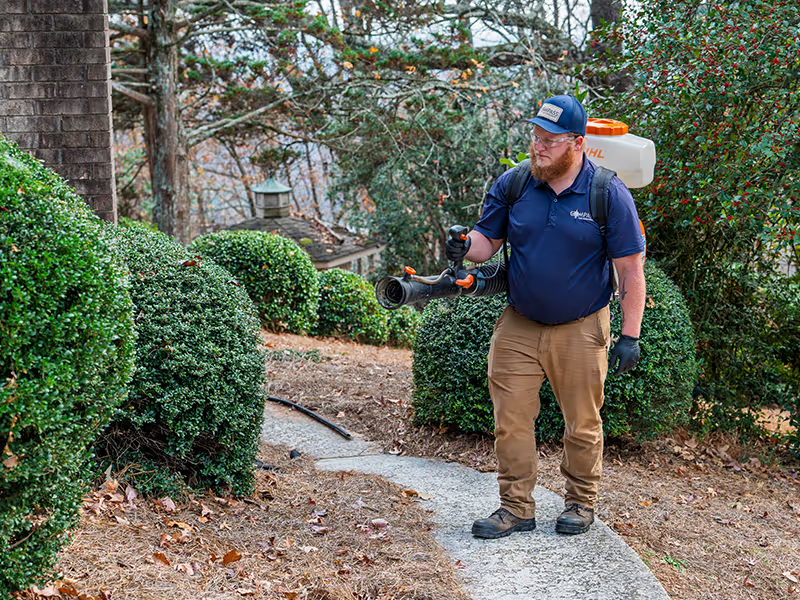
Compass Pest Management offers home pest control throughout Greenville, Anderson, and Upstate South Carolina, as well as Cornelia and Northeast Georgia. Pest treatments and de-webbing eliminate existing spiders and unsightly webs, and ongoing service throughout the year keeps spiders from settling back in.
If house spiders or other pests have moved in around your home, request your free quote today.

Dale G has offered his expertise on a number of matters for our home: pest control, moisture control, moisture remediation, and insulation. I always leave the conversation feeling much more knowledgeable and having options. Dale makes us excited to contract Compass.
Anthony R.
Greenville, SC

Professional and friendly service! We are new to the area and happy we selected Compass for our pest control needs.
April Z.
Anderson, SC

I’ve been using Compass for over 5 years now for pest control and mosquito control and they do a great job. They are on time and always very professional. They are very accommodating if I ever needed anything else done like an ant problem in my kitchen.
Penny F.
Cornelia, GA



Helpful Tips & Info