What Spiders Are Common Around SC & GA Homes?
There are many spider species in Georgia and South Carolina, but homeowners tend to notice a smaller group around houses, garages, landscaping, and other areas where people spend time.
Wolf Spiders
Wolf spiders don't build webs to catch their food. Instead, they actively hunt insects and other small arthropods, usually at ground level.
Their relatively large size and quick movement make them especially noticeable when one runs across a garage floor or turns up inside the house. Outdoors, they live in lawns, leaf litter, landscaped areas, and other places that provide cover and access to prey.
Finding a wolf spider indoors doesn't necessarily mean others are living somewhere inside. These spiders commonly live outdoors and can wander into structures while moving or hunting.
House Spiders and Other Web-Building Spiders
Several types of spiders build webs on or around homes. Depending on the species, you may find webs in corners, around windows, beneath eaves, near exterior lights, in garages, or in other relatively undisturbed areas.
Some spiders can also live and reproduce indoors when conditions suit them. That can make repeated webs in interior corners, storage areas, or other quiet spaces different from occasionally finding an outdoor spider that wandered through a door.
Black Widow Spiders
Black widows occur in both Georgia and South Carolina and deserve more caution than the typical spider found around a home.
They tend to build irregular webs in protected, relatively undisturbed places. Around residential properties, that can include woodpiles, sheds, garages, crawl spaces, beneath outdoor items, and other sheltered areas.
Because black widow venom is medically significant, avoid handling a spider you suspect may be a widow.
Large Outdoor Orb-Weavers
Some of the most noticeable spiders around Georgia and South Carolina homes are orb-weavers that construct large, circular webs outdoors. These webs can appear between shrubs and trees or between vegetation and parts of a structure.
Joro spiders are one increasingly familiar example in the region, especially in Northeast Georgia. Despite their size and conspicuous webs, they are primarily outdoor spiders and pose little risk to people.
Why Are Spiders Getting Into My House?
For many homeowners, the spider outside isn't the one that causes concern. It's the one that suddenly appears in the bathroom, garage, bedroom, or hallway.
Many spiders normally live outside and enter homes accidentally. Gaps around doors and garage doors, utility penetrations, damaged screens, and other openings can provide a way inside. Spiders can also wander indoors while hunting or moving between sheltered areas.
Garages are particularly common places to encounter them because garage doors regularly open to the outdoors and the space provides plenty of protected areas to explore.
Once indoors, some spiders may settle in quieter locations where they aren't frequently disturbed. Closets, storage areas, corners, crawl spaces, and spaces around stored belongings can all provide shelter.
Where Do Spiders Hide Inside Homes?
Where you find a spider can sometimes tell you more than the sighting itself.
A spider that runs across the floor near an exterior door may simply have wandered inside. Webs that repeatedly appear in the same indoor corners suggest that the location is suitable for a web-building spider.
Inside homes, spiders can turn up around:
- Garages and storage areas
- Closets and quiet corners
- Basements and crawl spaces
- Windows and doors
- Boxes and other stored belongings
- Areas where insects are active
A spider found near a frequently opened garage door is a different situation from repeatedly finding webs and spiders in several interior rooms. How often you're seeing them and where they're appearing matter more than one isolated sighting.
Does Seeing One Spider Mean You Have More?
Not necessarily.
A single spider can enter from outdoors without establishing itself inside your home. This is especially true for active hunters such as wolf spiders that can wander into structures.
Repeated sightings deserve more attention. If you're seeing spiders in several rooms, continually finding new webs, or noticing activity in the same areas week after week, there may be conditions that are allowing spiders to remain around the home.
That still doesn't automatically mean you have a large spider infestation hidden somewhere. It does mean there's more reason to look at where they're coming from and what may be supporting the activity.
Why Do I Keep Seeing Spiders Around My Home?
Food is one of the biggest reasons spiders remain active in a particular area. Spiders are predators, and places with plenty of insects give them opportunities to hunt or build productive webs.
Exterior lights are a good real-life example. Lights around doors, garages, and other parts of a home can attract moths and other flying insects after dark. Web-building spiders may take advantage of that activity by building nearby.
Shelter matters too. Eaves, window frames, garages, storage areas, crawl spaces, landscaping, and other protected locations can provide places for different spiders to hunt, build webs, or remain undisturbed.
If you're repeatedly clearing webs from windows, exterior lights, or the garage of your home, the spiders you're removing may only be part of what is happening there. Insects gathering in those same areas can help support continued spider activity.
That doesn't mean every property with spiders has another pest infestation. Spiders are a normal part of the outdoor environment. But reducing the insects they feed on can be an important part of managing persistent spider activity around a home.
Which Spiders Should I Be Careful Around?
Most spiders found around Georgia and South Carolina homes aren't considered dangerous to people, and spiders generally aren't aggressive toward humans.
Black widows are an important exception because their venom is medically significant. They favor protected locations where they are less likely to be disturbed, so homeowners should use caution when reaching into woodpiles, storage areas, sheds, crawl spaces, and similar places.
Brown recluse spiders also have medically significant venom, but there's an important regional distinction. Brown recluse spiders are extremely rare in Georgia, and other brown spiders are frequently mistaken for them.
If you find a spider you can't identify, there's no reason to handle it. And if a suspected spider bite causes severe or concerning symptoms, seek medical attention rather than trying to determine the species yourself.
When Does Spider Activity Deserve a Closer Look?
You don't need professional pest control every time a spider wanders through an open door.
It makes more sense to investigate when sightings become frequent, spiders are appearing in multiple areas of the house, or webs keep returning shortly after you remove them. Numerous spiders around doors, windows, garages, and other entry areas can also indicate that your home is providing good hunting or web-building opportunities.
The same is true when you're concerned about the type of spider you're finding. Proper identification can help determine whether you're dealing with a harmless occasional visitor or a spider that warrants more caution.
How Compass Helps With Spiders Inside and Around Your Home
Spider control shouldn't focus only on the spider or web that's visible today.
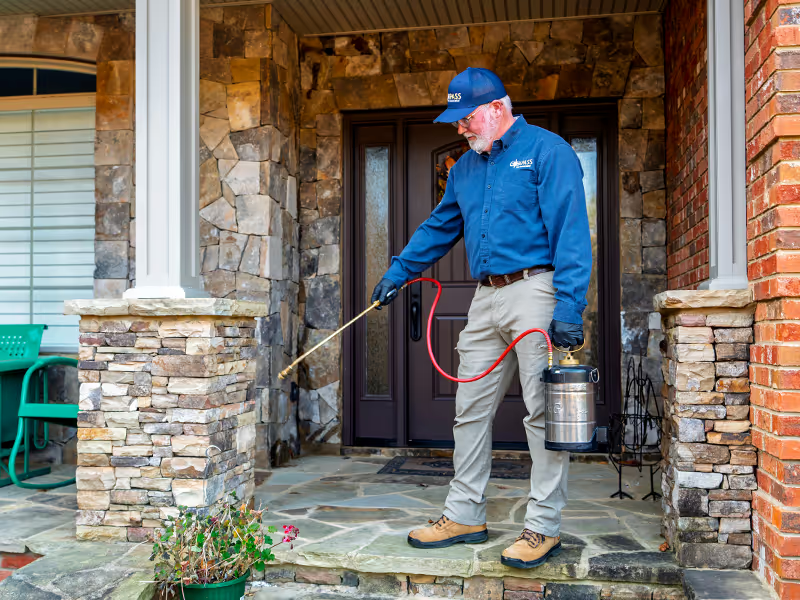
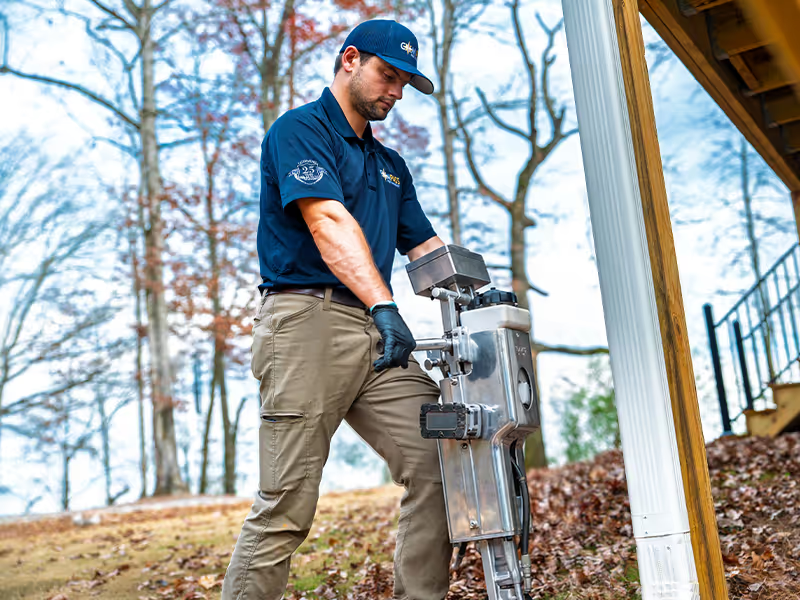
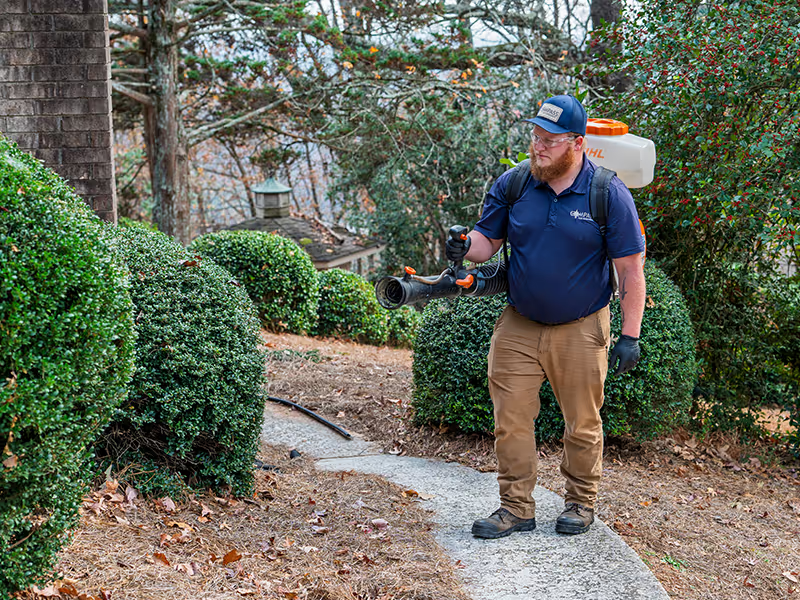
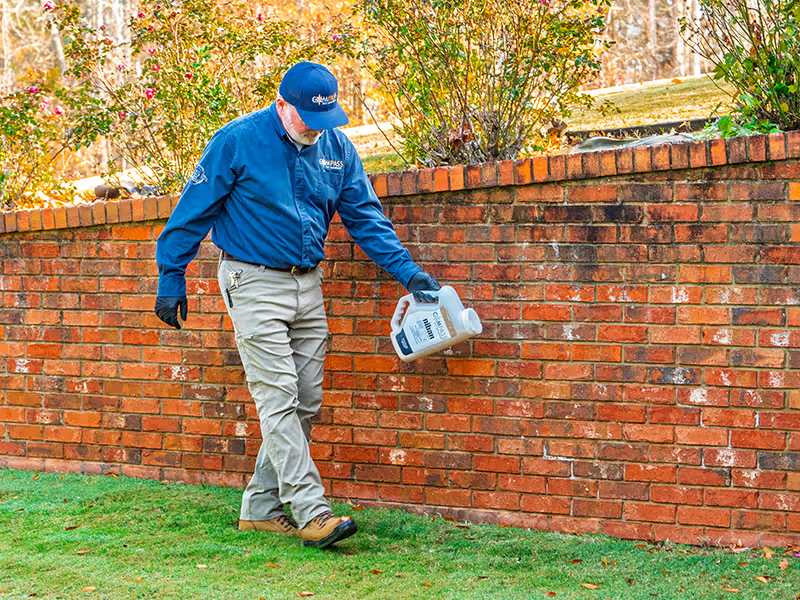
Compass Pest Management's residential pest control plans include ongoing service for spiders and other common household pests. Treatments focus on the exterior of the home, where many pest problems begin, and can include removing accessible spider webs up to 15 feet, along with other preventive pest control measures around the property. If pests are showing up inside, interior service is also available when needed or requested.
Addressing other pest activity can be important as well. Fewer insects around the structure means fewer feeding opportunities for spiders.
Our technicians can look at where spiders are showing up, identify the activity they're finding, and determine how best to address it. Ongoing service also allows us to continue managing spider and general pest activity around the home throughout the year.
Whether you're finding spiders inside your home or repeatedly clearing webs from the exterior, you don't have to wait until the activity becomes difficult to ignore.
Get Help With Spiders Around Your Home
Dealing with a spider problem? Compass Pest Management serves homeowners in Anderson, Greenville, Cornelia, and Clarkesville, as well as throughout Upstate South Carolina and Northeast Georgia.
Contact us to schedule service and get professional help with spiders around your home.
Originally published October 9, 2024. Updated September 10, 2026.