Yellow jackets are one of the most aggressive stinging insects homeowners encounter in South Carolina and Georgia. They build large colonies and will aggressively defend their nests when disturbed. Because many nests are hidden underground or tucked away in structures, people often don't realize they're nearby until yellow jackets suddenly appear in the yard.
At Compass Pest Management, yellow jacket problems are among the most common stinging insect issues we handle throughout Upstate South Carolina and Northeast Georgia.
This guide will help you identify yellow jackets, recognize the signs of a nest, and know when to call a professional.

Yellow jacket activity in South Carolina and Georgia follows a predictable seasonal pattern. Queens emerge in spring and begin building small nests that grow rapidly throughout the summer as workers hatch and forage. By late summer and early fall, colonies reach their largest size, making this the time of year when yellow jackets are most active and aggressive. As temperatures cool in late fall, colonies die off, while newly mated queens seek sheltered locations to overwinter until the following spring. Because winters across the Southeast are often mild, yellow jacket activity can sometimes continue later into the season than homeowners expect.
Quick ID
Yellow jackets are frequently mistaken for honeybees, paper wasps, and other stinging insects. Knowing the differences matters because each species behaves differently around people and nests.
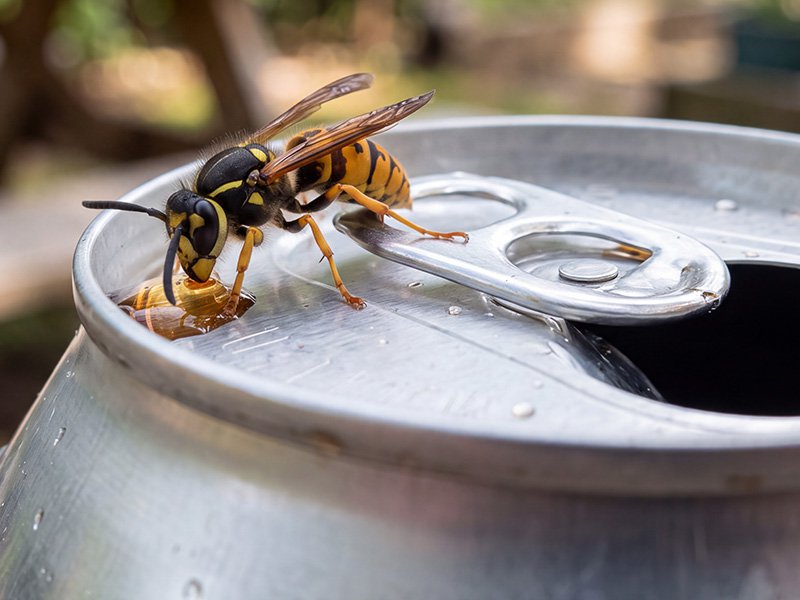
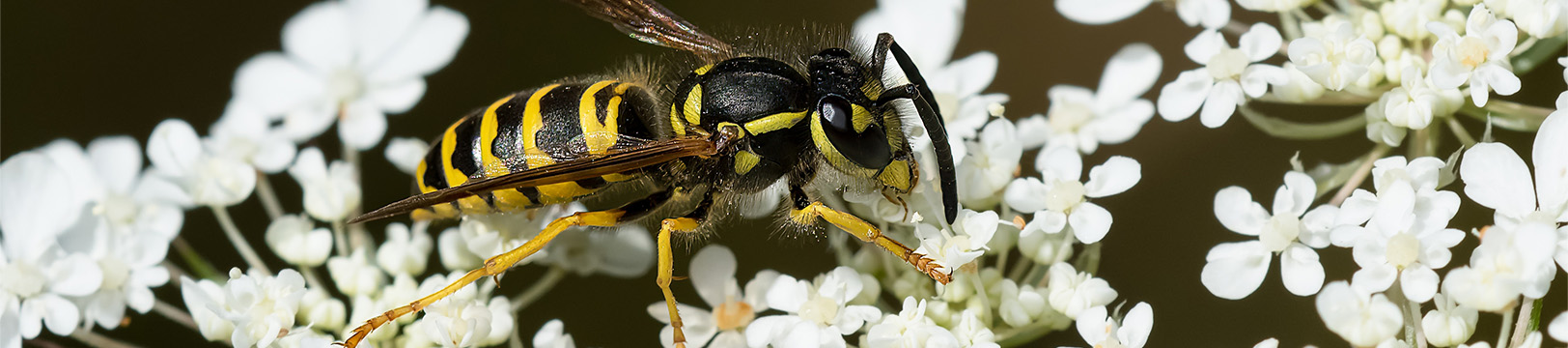
Honeybees are fuzzy and rounder, with a golden-brown color. They're generally docile and only sting once. Yellow jackets, on the other hand, are smooth and hairless with bright black-and-yellow banding, and they can sting repeatedly.
Paper wasps are longer and more slender, with visible legs dangling during flight. They build small, open-faced nests and are usually less aggressive than yellow jackets. If you're seeing a stocky, fast-moving wasp that tucks its legs in while flying, you're likely dealing with yellow jackets.
Yellow jackets prefer to keep their nests hidden. Unlike paper wasps, which build exposed nests you can easily spot under eaves and overhangs, yellow jackets often nest underground or inside protected spaces around homes. That's one reason they're so dangerous—many homeowners don't realize a nest is nearby until they accidentally disturb it.
Common nesting areas include:
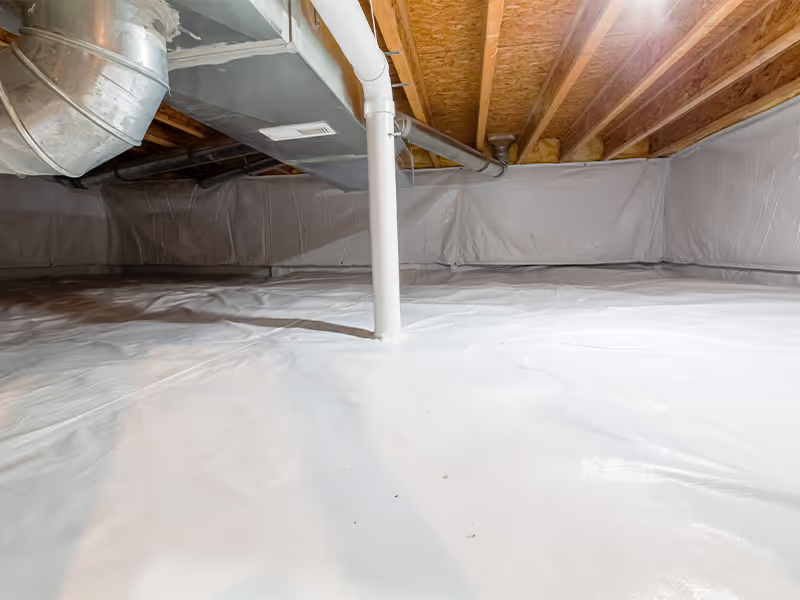
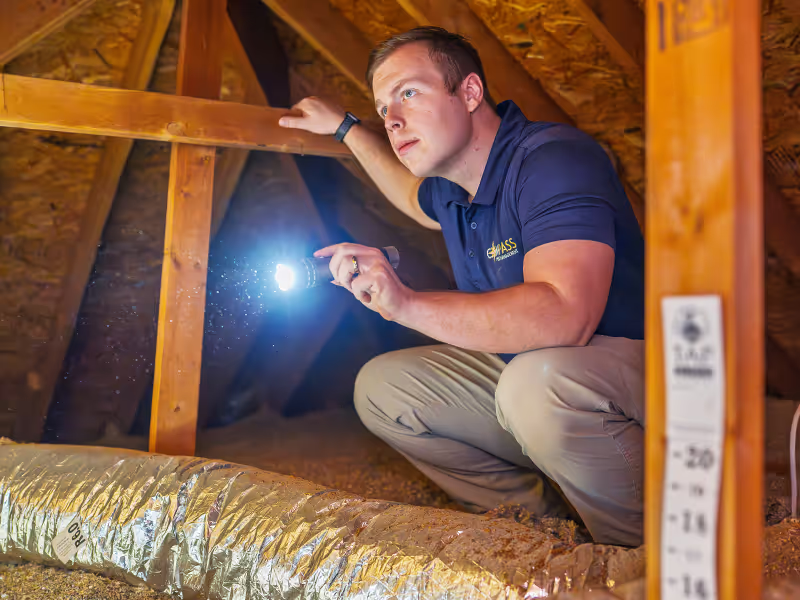
At Compass Pest Management, we commonly find yellow jacket nests hidden in landscape beds, retaining walls, crawl spaces, and underground burrows throughout Upstate South Carolina and Northeast Georgia.
The entrance to a yellow jacket nest is often surprisingly easy to miss. It may be nothing more than a small hole in the ground or a gap around a structure. That's why many homeowners don't discover a nest until they start mowing, gardening, or working nearby.
Common signs that yellow jackets have established a colony on your property include:
Yellow jackets are among the most dangerous stinging insects homeowners deal with in our area. Unlike honeybees, they don't lose their stinger—so a single yellow jacket can sting multiple times in rapid succession.
Risks include:
Because yellow jackets often nest in the ground where people walk, mow, and play, accidental encounters are especially common and can escalate quickly.
Yellow jackets are drawn to environments that provide food, water, and nesting opportunities.
Common attractants include:
Yellow jackets become especially drawn to food sources in late summer and fall as their natural prey declines and colonies reach peak size. That's when they're most likely to crash outdoor gatherings and cookouts.
If you notice yellow jacket activity on your property, the most important step is to stay away from the nest entrance. Avoid mowing, digging, or walking near the area, and keep children and pets clear.
Why DIY removal doesn't work with yellow jackets:
Professional removal is the only reliable way to eliminate a yellow jacket colony. Contact Compass Pest Management for fast, effective treatment.
While professional treatment is the best solution for an active nest, homeowners can take steps to reduce the chances of yellow jackets nesting on their property:
If you spot yellow jackets flying in and out of the ground, a wall, or any structure on your property, contact Compass Pest Management right away. Yellow jacket colonies grow quickly, and the longer a nest goes untreated, the larger and more aggressive the colony becomes.
Compass Pest Management provides professional pest control for homes and businesses throughout Upstate South Carolina and Northeast Georgia. Our experienced technicians identify the species, locate the nest, and eliminate the colony so your yard is comfortable and your family is protected.
Request your free quote today or give us a call to schedule an inspection.
Yes. Yellow jackets can sometimes sting through thin clothing, especially lightweight shirts, athletic wear, and other thin fabrics. During a defensive attack, multiple yellow jackets may also find exposed skin around sleeves, collars, pant legs, and other openings.
Yellow jackets live in large colonies and respond quickly when they believe their nest is threatened. When a worker detects danger, it releases alarm pheromones that alert nearby yellow jackets. This can cause multiple workers to join in the defense of the colony within seconds.
Yellow jackets are most active during the day. At night, workers typically return to the nest. However, nests located near outdoor lighting may still show some activity after dark.
Most yellow jacket nests don't cause structural damage. However, nests built inside wall voids, attics, or crawl spaces can create problems if the colony grows large or if workers begin searching for new exits into living spaces.
Sometimes. Even after a colony dies off, old nest locations can remain attractive to future queens looking for nesting sites. Homeowners may also continue seeing occasional yellow jackets in the area as they forage for food, especially during warm weather.

Dale G has offered his expertise on a number of matters for our home: pest control, moisture control, moisture remediation, and insulation. I always leave the conversation feeling much more knowledgeable and having options. Dale makes us excited to contract Compass.
Anthony R.
Greenville, SC

Professional and friendly service! We are new to the area and happy we selected Compass for our pest control needs.
April Z.
Anderson, SC

I’ve been using Compass for over 5 years now for pest control and mosquito control and they do a great job. They are on time and always very professional. They are very accommodating if I ever needed anything else done like an ant problem in my kitchen.
Penny F.
Cornelia, GA



Helpful Tips & Info