What Are the Most Common Signs of a Rodent Infestation?
The most common signs of mice or rats include:
- Droppings in cabinets, pantries, attics, garages, or crawl spaces
- Gnawed wood, plastic, wiring, or insulation
- Chewed or contaminated food packages
- Greasy rub marks or tracks along frequently traveled routes
- Shredded material gathered into a nest
- Scratching, scurrying, or gnawing noises
- Musky or ammonia-like odors
- Pets repeatedly focusing on the same hidden area
- Burrows near foundations, decks, sheds, or stored materials
- Gaps or damaged openings that provide access to the home
Which Mice and Rats May Enter Local Homes?
In our service area, signs of rodent activity inside a home may come from a house mouse, roof rat, or Norway rat. Their habits overlap, but where they travel, feed, and nest can offer clues about which one you may be dealing with.
- House mice are the smallest of the three. They can nest in kitchens, garages, attics, stored belongings, and wall voids.
- Roof rats are agile climbers. Activity in attics, rafters, rooflines, or upper wall cavities may point to roof rats, although mice can use these areas too.
- Norway rats are heavier-bodied and more ground-oriented. They commonly use garages, crawl spaces, lower levels, and burrows near foundations.
These are useful behavior patterns, not a substitute for identification. A young rat may be mistaken for a mouse, and sounds inside a structure may come from squirrels or other wildlife.
1. Rodent Droppings
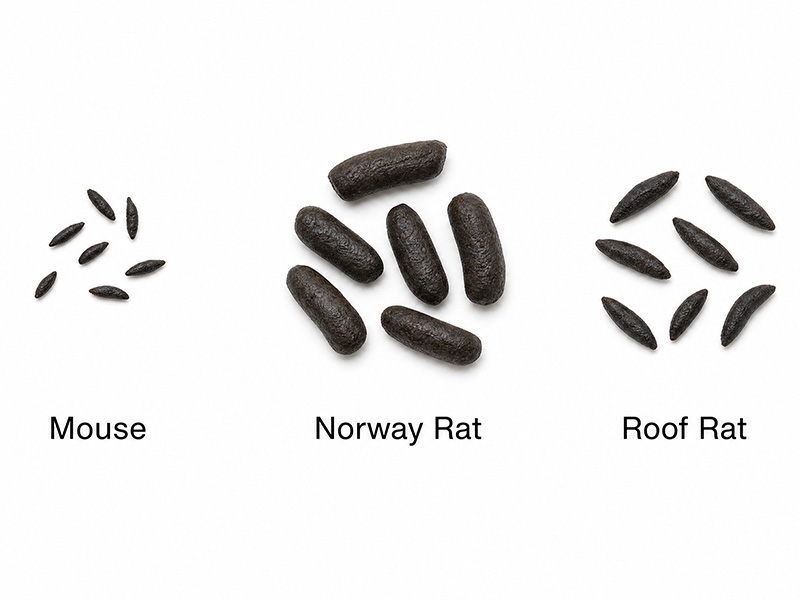
Droppings are among the most recognizable signs of mice or rats. Look around food storage, beneath sinks, behind appliances, inside drawers, along walls, and near attic or crawl-space nesting areas.
Approximate sizes and shapes include:
- House mouse droppings are usually 1/8 to 1/4 inch long and often tapered at the ends.
- Roof rat droppings are commonly about 1/2 inch long and may appear curved or pointed.
- Norway rat droppings can approach 3/4 inch and are typically thicker, with blunter ends.
Size and shape vary, so droppings alone may not provide a definite identification.
Newer droppings may look dark or shiny, while older droppings become dull and dry. However, temperature and humidity can affect their appearance. Old droppings prove that rodents have been present, but they do not necessarily prove that the infestation is still active. Droppings that reappear after proper cleanup are much stronger evidence of current activity.
Never handle droppings to test their age.
2. Gnaw Marks and Damaged Materials
House mice, roof rats, and Norway rats all gnaw. Their damage may appear on:
- Baseboards, cabinets, and door frames
- Plastic containers or pipes
- Drywall edges
- Electrical wiring
- Attic insulation
- Stored boxes and belongings
Mouse damage is generally smaller and finer than rat damage. Broader tooth marks, larger openings, and heavier damage are more consistent with rats.
Location may provide another clue. Damage around eaves, rafters, or attic access points can be consistent with roof rats or mice. Damage near foundations, garages, crawl spaces, or ground-level utility openings may suggest Norway rats or mice.
Chewed wiring should be taken seriously because damaged insulation around a wire can create an electrical hazard. Avoid touching exposed wiring and contact an appropriate professional if you discover it.
3. Chewed or Contaminated Food
A hole in a cereal box or pet-food bag may be one of the first signs noticed in a kitchen, pantry, mudroom, or garage. All three rodents can damage food packaging, although mice need much smaller openings to reach stored food.
Look for:
- Small holes in bags, boxes, or plastic containers
- Spilled seeds, cereal, rice, or pet food
- Droppings or nesting debris near food
- Packages that appear stained or have an unusual odor
Discard food that has been visibly gnawed or contaminated. Check nearby packages too, and move replacement food into thick plastic, metal, or glass containers with tight-fitting lids.
4. Grease Marks, Tracks, and Travel Routes
Mice and rats tend to reuse protected routes along walls, pipes, beams, cabinets, and stored objects. Repeated contact can leave dark rub marks from oil and dirt on their fur.
Rat rub marks are often more noticeable because of the animal’s larger body. Mouse marks may be faint, but you may see tiny footprints or tail marks in dusty areas. Frequently traveled paths can also appear cleaner than the surrounding surface.
Roof rats may leave evidence along elevated pipes, rafters, or ledges. Norway rat routes are more often found near walls and objects at ground level. House mice can travel in either area.
A smudge alone is not enough to confirm rodents. Look for nearby droppings, gnawing, tracks, or nesting material.
5. Nests and Shredded Material
Mice and rats build nests from available soft material, including:
- Paper
- Cardboard
- Fabric
- Fiberglass or cellulose insulation
- Dried plant material
- Upholstery or stored textiles
House mouse nests may be tucked inside cabinets, stored boxes, appliances, wall voids, or attic insulation. Roof rat nests are more likely in attics, upper wall cavities, or other elevated areas. Norway rats often nest at ground level, in crawl spaces, beneath stored materials, or in outdoor burrows.
An abandoned nest does not necessarily mean rodents are still present. Fresh droppings, a noticeable odor, recently shredded material, or recurring noises nearby make current use more likely.
6. Scratching, Scurrying, or Gnawing Noises
You may hear light scratching, quick movement, or gnawing after the house becomes quiet. Mice and rats are often active after dark, so noises may be more noticeable at night.
The location can offer a clue:
- Attic and upper-wall activity may be caused by roof rats or mice.
- Lower walls, cabinets, garages, and crawl spaces may be used by Norway rats or mice.
- Movement around pipes, chases, and wall voids could involve any of the three.
Sound alone cannot confirm a rodent or identify the species. Squirrels, bats, birds, and other wildlife can also create noises in attics and walls. Timing, entry evidence, droppings, and damage should be considered together.
7. Musky or Ammonia-Like Odors
Urine, droppings, nesting material, or a dead rodent can produce an unpleasant odor. It may be strongest inside cabinets, closets, attics, crawl spaces, or enclosed wall areas.
House mice, roof rats, and Norway rats can all produce noticeable odors when activity is concentrated. The strength of the odor does not reliably reveal the species or number of rodents, but a persistent smell warrants investigation—especially when combined with droppings or gnawing.
A sudden, intense odor may indicate that a rodent died in an inaccessible space. Masking the smell will not address the underlying contamination or entry problem.
8. Unusual Attention from Pets
Dogs and cats may notice hidden rodent activity before people do. A pet may repeatedly sniff, stare at, paw at, or wait beside the same wall, cabinet, appliance, floor vent, or attic access.
House mice, roof rats, and Norway rats can all attract this attention when they travel or nest inside hidden spaces. The location may offer a clue, but your pet’s behavior cannot identify the species or confirm an infestation by itself.
A pet occasionally staring at a wall is not necessarily cause for concern. The behavior becomes more meaningful when it repeatedly occurs in the same place or is accompanied by droppings, gnaw marks, nesting material, odors, or noises.
9. Burrows Near the Home
Burrows are most closely associated with Norway rats. Check beneath decks, along foundations, behind dense vegetation, near woodpiles, around sheds, and beside stored materials.
An active burrow may have a relatively clean entrance, compacted soil, or a worn travel route nearby. Roof rats and house mice are less likely to create the same obvious ground-level burrow pattern, although they may use existing voids and sheltered outdoor nesting sites.
Not every hole beside a home belongs to a rat. Chipmunks, voles, insects, and other animals also dig. Identification should consider the hole’s size, location, tracks, droppings, and surrounding damage.
10. Gaps and Damaged Entry Points
Finding a possible entry point does not prove rodents are inside, but openings near other evidence can help explain how the problem began.
Mice can pass through a hole about 1/4 inch wide, while rats can use openings around 1/2 inch. Both types of rodents may enlarge vulnerable gaps by gnawing.
Inspect:
- Gaps around plumbing, wiring, gas, or cable penetrations
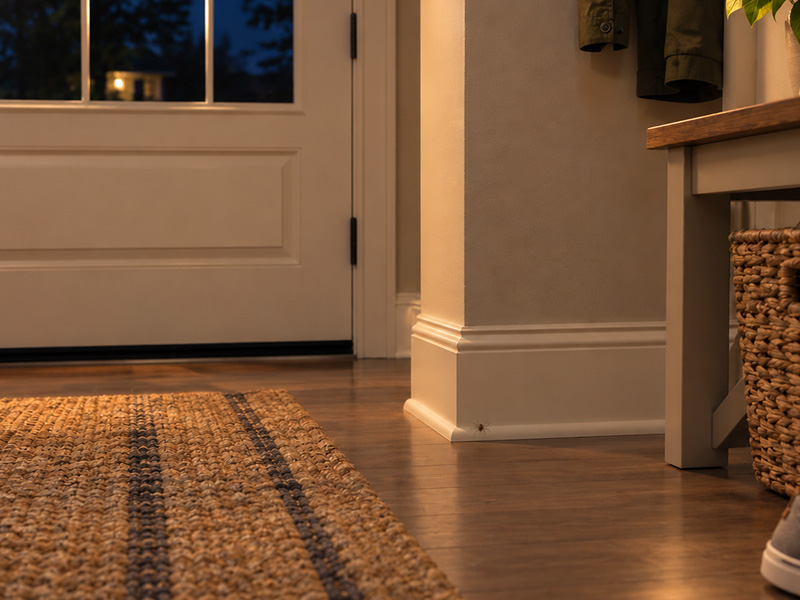
- Worn weatherstripping and spaces beneath exterior doors
- Garage-door corners
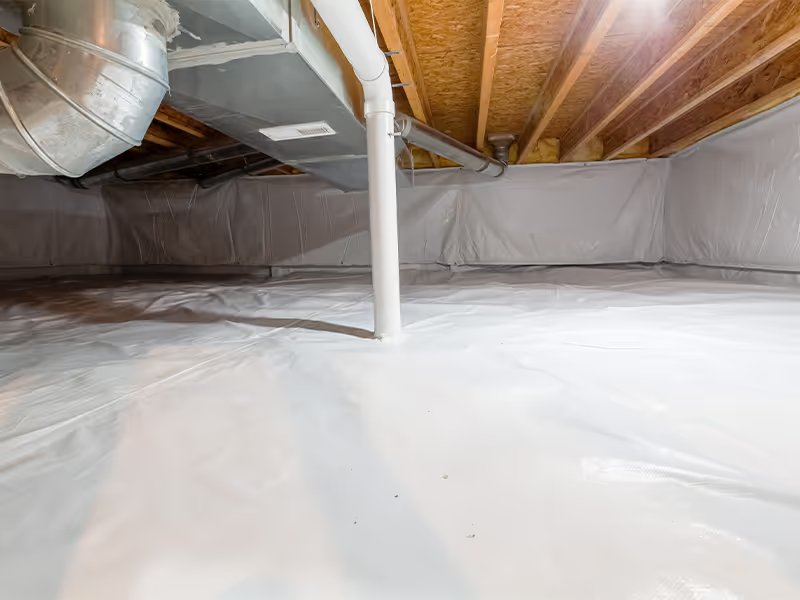
- Damaged foundation or crawl-space vents
- Openings around attic vents, soffits, eaves, and roof intersections
- Loose siding, damaged trim, or deteriorated masonry
- Areas where additions, decks, or porches meet the house
A complete inspection should include both the foundation and roofline. Focusing only on ground-level gaps can miss roof-rat access, while inspecting only the attic can overlook Norway rat activity below the home.
Durable, rodent-resistant repair materials are generally more dependable than exposed foam alone. The correct repair depends on the opening, surrounding material, ventilation requirements, and whether rodents are still inside.
What Should You Do After Finding Rodent Evidence?
Do Not Sweep or Vacuum Dry Droppings
This is one of the most important safety points. The CDC advises against sweeping or vacuuming rodent urine, droppings, or nesting material because doing so can place contaminated particles into the air.
For a small, accessible cleanup, follow current CDC guidance: wear rubber or plastic gloves, thoroughly wet the waste with an appropriate disinfectant, allow the required contact time, and wipe it up with disposable towels. Wash your gloved hands before removing the gloves, then wash your bare hands.
Heavy contamination, inaccessible nesting areas, HVAC involvement, or large quantities of waste may require professional cleanup precautions.
Protect Food and Reduce Attractants
Until the source of the activity is resolved:
- Store human and pet food in sturdy containers with tight lids.
- Clean crumbs and spills promptly.
- Do not leave pet food out overnight.
- Keep indoor and outdoor garbage covered.
- Correct accessible water leaks.
- Reduce clutter that could conceal nests.
- Move birdseed, grass seed, and animal feed into rodent-resistant containers.
These steps make the home less attractive, but they do not remove rodents that are already nesting inside.
Document What You Find
Before cleaning an accessible area, take clear photos of droppings, damage, tracks, nests, and suspected entry points. Note whether the evidence was found in an attic, kitchen, garage, crawl space, or outside the foundation.
Those details can help us determine where to inspect and which rodent is most likely involved.
Can You Handle Mice or Rats Yourself?
DIY efforts often fall short when:
- More than one part of the home contains evidence
- Activity is inside walls, an attic, or a crawl space
- The rodent species has not been identified
- Entry points have not been found
- Droppings return after cleanup
- Traps are catching rodents but the activity continues
- Bait could be reached by children, pets, or wildlife
- Rodents may die inside inaccessible areas
Removing individual rodents without addressing access can allow new ones to replace them. Effective control should consider the active population, travel routes, food and water sources, nesting areas, entry conditions, cleanup needs, and follow-up monitoring.
What If Rodents Have Damaged Attic Insulation?
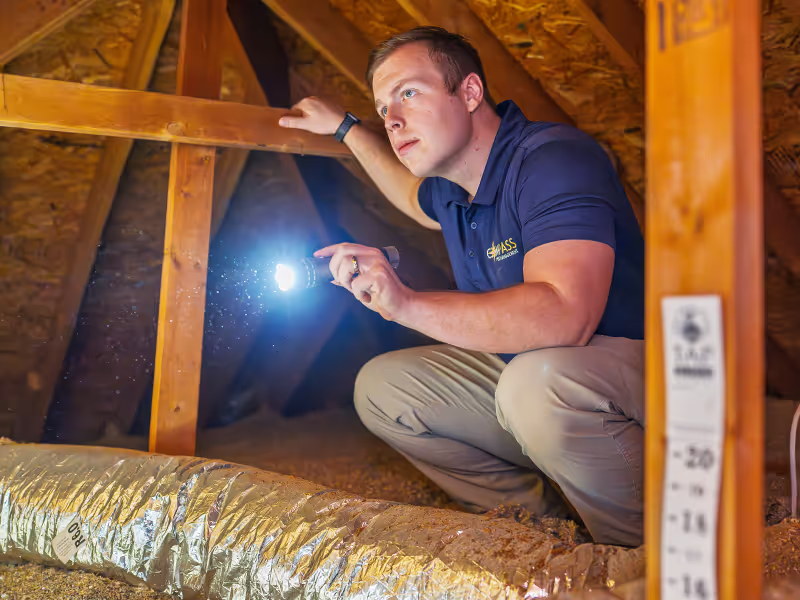
Rodents can tunnel through, compress, shred, and contaminate attic insulation. That does not mean every attic needs complete insulation removal. The right recommendation depends on the location and extent of the damage, the amount of contamination, the insulation’s condition, and whether the rodent problem has been controlled.
When removal and replacement are appropriate, Compass installs TAP® Pest Control Insulation rather than conventional replacement insulation. We can evaluate the existing material, remove or supplement it when needed, and install TAP at the appropriate coverage level.
TAP provides thermal and acoustical benefits and contains an EPA-registered insect-control component. It is important to understand that TAP is not labeled to control mice, rats, or squirrels. Rodent treatment and entry-point correction must be handled separately. We recommend addressing active rodents before installing new attic insulation so the replacement material is not exposed to the same problem.
Learn more about our TAP insulation installation and attic evaluation.
When Should You Call a Rodent Control Professional?
Some homeowners call us after finding droppings, gnaw marks, or other evidence of rodents. Others call because they want mice and rat protection included in the regular pest control service for their home.
Both needs are covered by Compass. Mice and rats are included in every residential pest control plan. When rodents are present, we determine where they are active, identify the type of rodent most likely involved, and treat the current problem. Routine pest treatments throughout the year keep that protection in place and allow us to address new activity if it appears.
You do not have to confirm an infestation before contacting us. Tell our local team what you have noticed, and we will help you get the right plan in place.
Frequently Asked Questions about Mice and Rats
Does one mouse mean I have an infestation?
One sighting does not reveal how many mice are present. However, it does confirm that at least one mouse found food, shelter, or access to the home. Inspect for droppings, gnawing, nesting material, and possible entry points rather than waiting for another sighting.
Will mice and rats enter a clean home?
Yes. Mice and rats are looking for food, water, shelter, and a way inside—not necessarily a dirty home. A well-maintained house can still offer warmth, moisture, pet food, stored pantry items, or an unnoticed opening around a door, vent, pipe, or roofline.
Cleaning and proper food storage make a home less attractive to rodents, but they cannot compensate for accessible entry points.
Will mice leave if you remove their nest?
Not necessarily. Removing a nest eliminates one shelter, but it does not remove the mice, close their entry point, or prevent them from building another nest nearby.
What does it mean if you see a rat during the day?
Rats are primarily active at night, but a daytime sighting does not automatically prove that a large infestation is present. A rat may emerge when food is available or when its normal hiding area has been disturbed.
Get Help with Mice and Rats in Northeast Georgia or Upstate South Carolina
Not knowing what is moving behind a wall—or whether a rodent problem is truly gone—can make it difficult to feel comfortable in your own home. We can replace that uncertainty with a clear assessment and a practical plan built around your property.
Compass Pest Management has protected homes in Cornelia, GA; Greenville, SC; Anderson, SC; and surrounding communities across Northeast Georgia and Upstate South Carolina since 1995. At our first visit, we will explain what we find, what we recommend, and what to expect next.
Ready to stop wondering and start solving the problem? Contact Compass Pest Management today to request a quote.